Most English-language guides to Japanese onsen etiquette read like cleaning instructions. Wash here, rinse there, no swimsuit, no towel in the water. The rules are correct. The frame is wrong.
A Japanese onsen is not a spa with hygiene rules. It is a small social contract between strangers who have agreed to share water, naked, in a quiet room. The rules are how the contract is honored. Once you see them as trust mechanisms rather than cleaning protocols, they stop seeming arbitrary, and the whole experience changes.
The frame: shared water, not personal bath
The structural fact about an onsen is this: the water is communal. The bath is filled in the morning and not drained until late at night. Every person who enters it is sharing it with everyone who came before and everyone who comes after.
In a private bathtub at home, the water belongs to one person. Soap, dirt, oils — they all wash off into water that nobody else will ever sit in. In an onsen, that math is different. Whatever you bring into the water, the next person bathes in.
This is the foundational reason behind almost every onsen rule. They aren’t arbitrary preferences. They are how strangers maintain a usable shared resource.
Wash before you enter — and what “wash” really means
Every onsen has a washing area before the baths — usually a row of low stools, handheld showers, soap, and shampoo. You wash here, fully, before stepping into the bath.
The word “wash” gets translated as a hygiene instruction, but the more accurate framing is public commitment. By scrubbing visibly in the washing area, you are showing the room that you are not bringing the day’s dirt into the shared water. It’s not about getting clean for yourself; it’s about ratifying the social contract for everyone else.
The procedure:
- Sit on a stool. Standing washes splash other bathers, which is its own offense.
- Use the soap and shampoo provided.
- Rinse thoroughly. Any soap that remains on you and goes into the bath is a violation of the next bather’s trust.
- Rinse the stool, basin, and shower head before leaving the spot. The next user starts clean.
You don’t need to scrub for fifteen minutes. A genuine, visible rinse-and-soap is what’s expected. The signal is what matters: I have prepared myself. I am safe to share water with.
The towel: small, ubiquitous, never in the water
You will be given (or asked to bring) a small towel that follows you through the entire onsen visit. It does several jobs: it covers you while walking between the changing area and the baths, it washes your body in the shower area, and it rests on your head or on the bath rim while you soak.
What it never does is enter the water.
Even a clean-looking towel carries soap residue at the molecular level. A towel dipped in the bath releases soap into water that no one wants soap in. So the universal Japanese practice is to fold the towel into a small rectangle and place it on top of your head while you soak — or, if your head feels silly, leave it neatly on the bath rim or a nearby ledge.
This is the rule most often broken by tourists and most quietly noted by locals. The wince is real, even if no one says anything.
No clothes, and the equalizer it creates
The clothing rule is the one Western visitors find most intimidating: no swimsuits, no towels, nothing. You enter the bath naked.
The reason is technical: any fabric — including polyester — releases lint, dye, and chemicals into the water. The hygiene argument alone is enough.
But the cultural function is more interesting. In an onsen, the lawyer and the construction worker, the executive and the new graduate, the foreign tourist and the local elder all sit in the same water, with the same body, no signals of status. There is no watch, no logo, no haircut tucked under a hat, no tailored jacket. Naked, everyone is reduced to body shape and the way they hold themselves.
This is the unspoken function of the onsen as a social space. It is one of the few public places in Japan where status is structurally invisible. The clothing rule isn’t just hygiene; it’s the mechanism that produces equality for an hour. Many Japanese workers go to onsen partly for that reason — a bath the boss can’t outdress them in.
The quiet
Onsen are not silent. Locals chat softly with people they came with. But the volume is low, the laughter is muted, and the assumption is that the room belongs to everyone, not your conversation.
This is the contract again. A communal hot bath demands a kind of audio contract: the next person should be able to soak in their own thoughts, not yours. Loud conversation, voice on a phone, music from a speaker — all read as a small theft of the shared atmosphere.
The trick is not to whisper, which feels artificial. It’s to speak as if the next bather over could hear you, which is roughly accurate to the architecture, and adjust accordingly.
Tattoos
The most charged onsen rule for foreigners is the historical exclusion of tattooed bathers. The rule comes from a specific source: Japanese organized crime (yakuza) members traditionally wear elaborate body tattoos, and onsen banned tattoos in the late 20th century to keep yakuza out of public baths.
For decades, the rule made no exceptions. A small lily on a shoulder counted the same as a full back piece. Foreigners were turned away alongside locals, and the discomfort was mutual — onsen owners often softened the rule for tourists when they could.
The 2020 Olympics push, and the broader rise of inbound tourism, moved the rule into a slow public reconsideration. Many onsen now publicly mark themselves as tattoo-friendly (タトゥーOK), and travel guides maintain lists of these. Smaller tattoos can often be covered with an adhesive patch (テープ) sold at convenience stores. Hot-spring towns with major tourism — Hakone, Beppu, Kusatsu — now have several tattoo-friendly facilities apiece.
The honest version: the rule still exists in many places, particularly older traditional ryokan, and is enforced unevenly. If you have visible ink, look up the policy in advance, or look for kashikiri-buro — private family-rentable baths — which sidestep the issue entirely.
Edge cases worth knowing
Mixed-gender (konyoku) baths are increasingly rare. Most onsen are now sex-segregated, and the few traditional konyoku that remain are often used mostly by older bathers or families. Don’t assume any onsen is mixed unless explicitly marked.
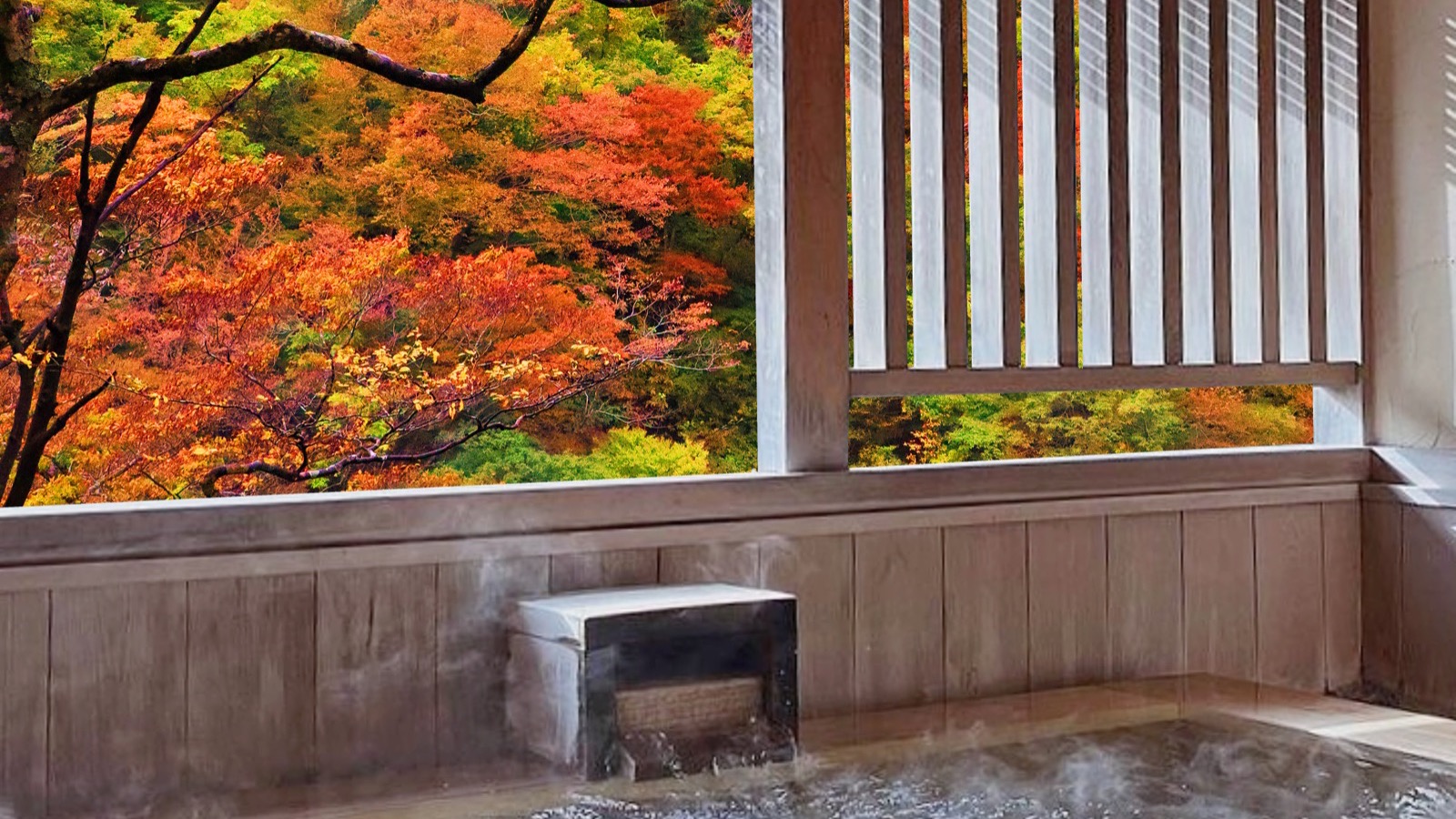
Outdoor baths (rotenburo) follow the same rules as indoor baths — wash first, no towel in water, no swimsuit. The setting changes; the contract doesn’t.
Long hair stays out of the water. Tie it up; it’s the same logic as the towel.
Drinking water from a bottle or hydration is welcome and encouraged — onsen dehydrates fast. Glass containers and alcohol are usually not allowed in the bath area itself.
What the rules add up to
Walk into your first onsen with hygiene-rules thinking and the experience feels like a regulated swimming pool. Walk in with trust-mechanism thinking and it transforms.
You wash to ratify your participation. You strip to enter the equalized space. You keep your towel out of the water as a continuous public gesture: I am holding up my end of this. You speak softly because the silence belongs to everyone. You absorb the rules about ink and modesty because the room is partly an old social code being maintained by everyone in it.
The reward, when you finally settle into the water and look up at the steam, is something Western private bathing doesn’t quite produce. You are not just hot and clean. You are part, briefly, of a small social agreement that has been working for centuries — and the water you’re in only feels the way it does because everyone around you is honoring it.
That’s the onsen.