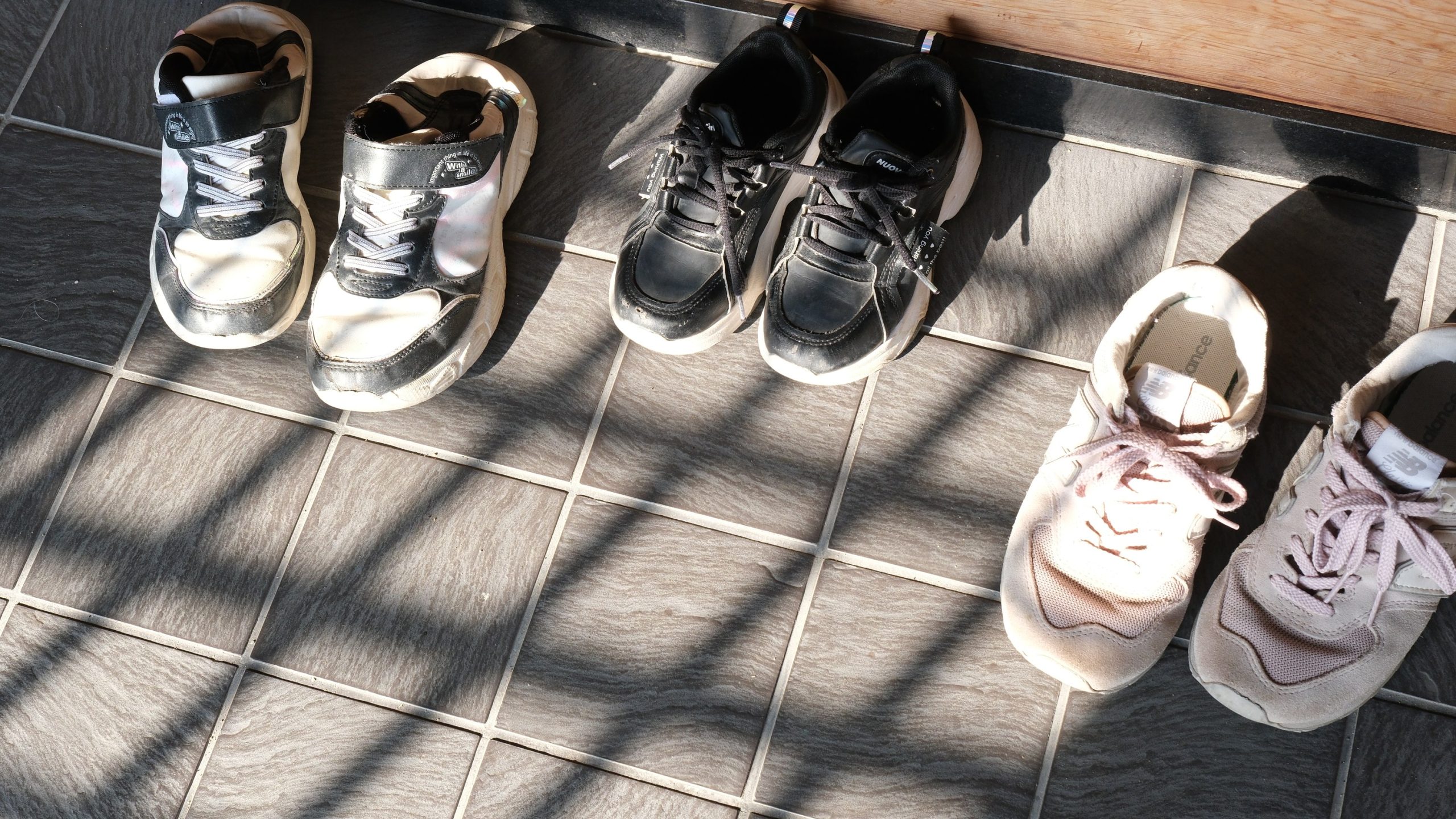
You arrive at a Japanese house. The door opens. There is a small step down — almost a shallow tile-floored pit — between the door and the hallway. A row of slippers waits on the upper step, neatly aligned. Your host says “douzo” and gestures inside. You step into the lower section, take off your shoes, turn them toward the door, step up onto the wooden floor, and put on the slippers.
That small choreographed transition is the genkan, and it is doing more than it first appears to. Physically and culturally, it is the place where Japan separates outside from inside. The rules around it are among the most consistently observed implicit rules in everyday Japanese life. Anyone who lives in Japan crosses a genkan dozens of times a day, mostly without thinking. Visitors who miss the logic tend to leave a small trail of quietly confused hosts behind them.
Table of Contents
- What the genkan is
- The choreography
- The slipper system
- Why the system exists
- Where else genkan logic applies
- Things foreigners commonly get wrong
- The principle underneath
What the genkan is
玄関 (genkan) literally translates as something like “entrance” or “front door area,” but the architectural reality is more specific. A genkan is the lowered entryway just inside the door of a Japanese home, school, traditional restaurant, ryokan, or temple. It’s typically tile, stone, or concrete — a different material from the rest of the floor — and it sits one step lower than the interior. That step is the entire point.
The lower section is for shoes. The higher section, where the floor changes from tile to wood or tatami, is shoes-off territory. The vertical drop between them — usually only 5 to 15 centimeters — does a surprising amount of cultural work. It turns a category boundary into architecture. Below the step is outside-equivalent. Above the step is inside.
The choreography
The standard sequence when entering a Japanese home:
You step into the lower genkan area still in your shoes. You greet your host (ojama shimasu — “I’m intruding,” the standard formal entry phrase). You take off your shoes while still standing in the lower section. You step up to the upper level without your shoes touching the upper floor. You turn back, bend down, and arrange your shoes so they face outward — toes toward the door, ready for departure.
That last step — the shoe flip — is the small piece visitors often miss. Leaving your shoes pointing inward, toes toward the house, reads as a little oblivious. Turning them outward means you can leave cleanly when the visit ends, with no awkward fumbling at the door. It is a tiny courtesy to the future version of everyone in the entryway.
The step itself is also a non-negotiable boundary. You do not stand on the upper floor in your shoes. You do not step into the lower genkan in your bare feet or socks. The vertical drop is, in practice, more important than any wall in the house.
The slipper system
Most Japanese homes provide guest slippers — usually lined up just above the step, ready to be stepped into the moment you arrive on the upper level. The slippers are for hallways, kitchens, and most rooms. They are not, however, for tatami mats. If the house has a tatami room, you take the slippers off at its threshold and walk on the tatami in socks or bare feet only.
The cleanliness gradient is simple once you see it: shoes for outside, tile genkan as the transition, slippers for interior hard floors, socks or bare feet for tatami. Each step removes one layer of outside contact. The whole system is a graded series of zones, each cleaner than the one before it, with the genkan acting as the filter at the entrance.
The famous toilet slippers — a separate pair of slippers worn only inside the bathroom, switched at the door — are a corollary. The bathroom is treated as a slightly less-clean interior zone, so it gets its own slippers, and you don’t track those slippers back into the rest of the house. Forgetting to switch back to the regular slippers when leaving the bathroom is the standard small gaffe of the foreign visitor, and the host’s quiet mention of it (“aa, surippa…“) is a regular feature of life in Japan.
Why the system exists
The simple explanation is hygiene: outdoor footwear carries dirt, mud, and worse, and Japanese living traditionally involved sitting and sleeping directly on the floor. Tatami in particular cannot be cleaned easily — it absorbs whatever it touches — so keeping footwear off it is structural to making the room livable.
The deeper explanation is that the genkan operationalizes a core distinction in Japanese culture: uchi (inside, the in-group) and soto (outside, the out-group). The same word that means “inside” applies metaphorically to family, close colleagues, the home group; soto applies to strangers, the world outside the door. A Japanese house keeps these categories spatially explicit. The shoes that walked through the soto world are removed at the genkan and left at the boundary; the bare feet that step up into the house are entering the uchi space, and they leave the dirt of the world behind them, literally.
This is why the rule is non-negotiable in a way that some etiquette rules are not. You can fumble a bow, mispronounce a phrase, or handle a small custom awkwardly. Track outdoor shoes onto a family’s tatami floor, and the air changes. The boundary has been crossed in the wrong way. The host will probably say nothing and clean it later, but the moment will not be invisible.
Where else genkan logic applies
The genkan isn’t only at houses. Many other places in Japan run on the same shoes-off architecture, and recognizing the cue saves embarrassment.
Traditional ryokan inns: the entrance has a genkan; you switch to slippers, and tatami-room slippers come off again at the room threshold. Some traditional restaurants, especially those with tatami floors or low private rooms — these almost always have a shoe-removal step somewhere, often signaled by a row of cubbies or a low bench. Temples and shrines, particularly the interior worship halls — visitors enter shoeless on the wooden floors. Schools, especially elementary and middle schools — students change into indoor shoes in a row of student-specific shoe lockers, and outdoor shoes do not enter the school proper. Some onsen and bathhouses — though here the architecture varies, the boundary still exists.
The cue to look for is simple: a step down at the entrance, a change in floor material, or a row of shoes or slippers near the door. Any of those means genkan logic is in effect, even if the building itself is modern.
Things foreigners commonly get wrong
Stepping up onto the upper level still wearing shoes — most common. Leaving shoes pointing inward, sloppy, or scattered. Walking onto tatami in slippers (the slippers come off at the tatami threshold). Wearing toilet slippers out of the bathroom. Sitting on the upper-level floor edge with feet hanging into the lower genkan area — this reads as casual to the point of disrespectful, like sitting on someone’s kitchen counter.
The fix for all of these is paying attention to the step itself. Once you start treating the genkan vertical drop as a real boundary — not a decorative architectural detail — the right behavior emerges naturally. Below the step: shoes. Above the step: not shoes. Tatami: not slippers either. The geography tells you what to do.
The principle underneath
What the genkan really is, beyond hygiene and tradition, is a ritual for moving between worlds. Every time you cross it, you perform a tiny ceremony: outside is left behind, inside is entered, and the body changes register. It costs ten seconds. It tells everyone in the house that you understand where you are.
Most cultures have some version of this — leaving coats by the door, scraping mud off boots, washing hands when you come home. The Japanese version is more architectural and more total. The category line isn’t suggested; it’s built into the floor. And it gets renewed every time the door opens, by every person who passes through it. Once you’ve internalized the small choreography, the rest of Japanese household etiquette starts making more sense, because it’s all built on the same foundational move: the world has zones, and the body adjusts at the boundaries.