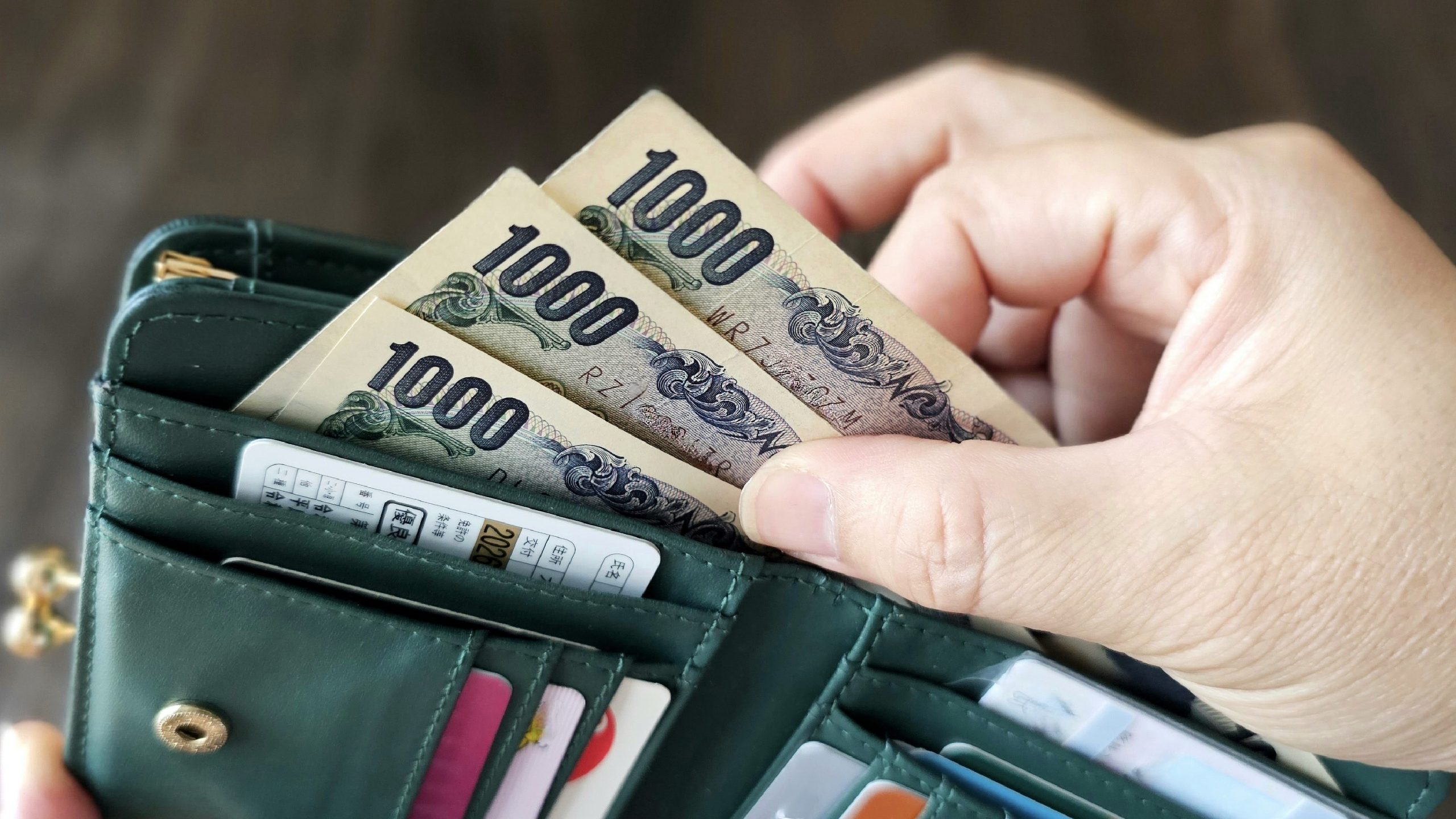
You have just had the best ramen of your life. The counter was spotless, the staff timed every refill without being asked, and the bowl arrived in exactly four minutes. You leave a few hundred yen coins on the counter as you stand to go. The staff member behind the counter chases you out the door, coins extended, face politely alarmed, convinced you forgot your change.
This is not an edge case. It happens to foreign visitors across Japan every day — in restaurants, taxis, hotel lobbies, and ryokan. The impulse behind leaving a tip is generous. The effect it produces is the opposite of what was intended: anxiety, confusion, and a quiet sense of having implied something went wrong.
Understanding why requires understanding something about what Japanese service actually is — and what money means inside it.
Table of Contents
- Why tipping does not exist here
- What leaving a tip actually communicates
- The one exception: kokorozuke
- How kokorozuke works in practice
- Sector by sector: restaurants, taxis, hotels, ryokan
- The alternative that actually works
- The principle underneath
Why tipping does not exist here
The standard explanation — “service is included in the price” — is accurate but incomplete. What it leaves out is the philosophy behind that inclusion.
Omotenashi (おもてなし) is often translated as “hospitality,” but its meaning is more specific: service given completely, without expectation of return. The nashi (なし) in the compound means “without” or “nothing behind.” A server in a Japanese restaurant is not performing hospitality in order to increase their income. The hospitality is the work. It is not a performance layered on top of the work — it is inseparable from it. See the fuller discussion of omotenashi for the depth of that concept.
In that framework, a tip does not say “you did well.” It says “here is a reward for performing above what your job requires.” But in omotenashi, full service is not above what the job requires — it is the job. The tip therefore creates a conceptual problem: it implies that the server was doing something extra, which implies that doing something extra was unexpected, which implies that their standard service might sometimes fall short of that. The message received is not encouragement but doubt.
What leaving a tip actually communicates
There is also a more direct discomfort. Japanese professional culture draws a clear line between the money exchanged in a commercial transaction (clean, impersonal, at the register) and money offered person-to-person outside that transaction (ambiguous, potentially embarrassing, difficult to refuse without offense).
When you leave coins on a restaurant table, the staff member who finds them faces a small problem. The money is not clean — it has not passed through the register, so it cannot go into the till. It is not a gift in any recognizable form. Taking it would feel like accepting something under the table; returning it requires chasing the customer, which creates a scene. Neither option is comfortable.
In a taxi, the dynamic is similar. Telling a driver to “keep the change” when the fare has been precisely metered — and when the driver has probably given you a business card, noted your destination before you arrived, and held the door with white-gloved hands — is experienced less as generosity and more as carelessness with money. The arithmetic of the fare is taken seriously. Disrupting it without ceremony reads as indifference.
Japanese etiquette in general places high value on transactions that conclude cleanly and without ambiguity. The tip, as practiced in Western countries, introduces ambiguity at the closing moment of an otherwise clean exchange.
The exception: kokorozuke
There is one situation where a monetary gift is not only acceptable but expected: the ryokan (旅館), the traditional Japanese inn. And within that context, the practice is governed by a distinct protocol.
The gift is called kokorozuke (心付け), literally “heart-attachment” or “a feeling conveyed.” It is offered to your assigned attendant — the nakai-san (仲居さん) — on arrival, not departure. The amount is typically ¥1,000–¥3,000 per person per night, though this varies by region and the formality of the establishment.
The critical difference from a Western tip: the kokorozuke is not a reward for service already rendered. It is offered before anything has happened. This positions it as a gesture of trust and relationship — you are expressing that you are the kind of guest who appreciates good care, not grading performance retroactively. It is closer to the logic of bringing a gift when you visit someone’s home than to leaving coins on a table.
How kokorozuke works in practice
The presentation matters as much as the amount. The kokorozuke is placed inside a small white envelope (pochibukuro, ぽち袋) or wrapped in a piece of washi paper and offered with both hands and a slight bow. Handing over bare bills — even the right amount — is considered crude, because it makes the exchange look too nakedly transactional.
The attendant will likely receive it with both hands, bow, and not open it in front of you. This is not indifference; it is propriety. Opening a gift immediately in Japan implies eagerness about the money rather than appreciation for the gesture.
Not every ryokan still expects or welcomes kokorozuke. Modern establishments increasingly post notices that service is fully included and no additional gratuities are necessary. When in doubt, ask the front desk before your attendant arrives — “Is kokorozuke appropriate here?” is a question any traditional inn will answer clearly and without embarrassment.
Sector by sector: restaurants, taxis, hotels, ryokan
Restaurants: Do not leave money on the table. Pay at the register. If you want to express appreciation, making eye contact, thanking the staff audibly (gochisousama deshita, ご馳走様でした, said when leaving), and looking genuinely satisfied does more than coins.
Ramen and standing bars: Same rule, but looser — these environments are fast and casual. The exchange at the register or ticket machine is the only transaction expected.
Taxis: Pay the exact metered fare or accept the change. Do not say “keep the change.” If you have benefited from something specific — the driver helped with luggage, navigated a difficult request, found an address through persistence — a genuine verbal thank-you carries more weight than extra money.
Business hotels and city hotels: No tipping for room service, concierge, or luggage assistance. The staff are salaried or hourly; the transaction structure does not include tips, and most hotel staff have been trained to decline them.
Ryokan: The one sector where kokorozuke applies — but only to your personal attendant, only in the traditional white envelope form, only on arrival.
Tour guides: This one is shifting. Guides who work with international tourists increasingly understand tipping culture and are not discomforted by it. Some will accept; some will decline. If you want to express appreciation, the envelope format and a personal thank-you is the safer form.
The alternative that actually works
If you want to express genuine appreciation to people who have helped you — a particularly attentive hotel clerk, a neighbor who gave you directions for twenty minutes, anyone who went beyond their expected role — the parallel practice to a tip in Japan is omiyage (お土産): a gift, typically food, brought from somewhere you’ve been.
The logic of omiyage maps neatly onto the problem. Food gifts are shareable, not personal — they go to a group rather than an individual, which avoids the discomfort of singling someone out with money. They carry the story of where you’ve been, which gives the recipient something to talk about. And they exist entirely outside the commercial transaction framework, so they do not imply anything about the quality of service rendered.
A small box of regional sweets from your home country or from the previous stop on your trip, offered to hotel staff or a particularly helpful shopkeeper, will be received with genuine warmth. It is recognizable as kindness rather than ambiguous as cash.
The principle underneath
The absence of tipping in Japan is sometimes presented as a curiosity — a charming cultural difference, a relief for budget travelers, an argument that Japanese service is exceptional because staff have “no incentive to be rude.” These framings miss the deeper structure.
Japanese service culture does not work without tips because service is not conceived as a performance by individuals angling for personal reward. It is conceived as a standard — set by the establishment, absorbed by the staff, delivered to the guest as an expression of professional integrity. The guest’s satisfaction is proof that the system is working correctly, not an occasion to redistribute bonus income.
When a tip is offered inside that system, it does not fit. The guest is importing a framework where personal performance generates personal reward, into a framework where professional service generates collective honor. The mismatch creates confusion rather than appreciation.
Understanding this is not just useful for avoiding awkward moments in restaurants. It is a window into how Japanese professional culture distributes credit, responsibility, and pride — not individually, but through the institution and the role.