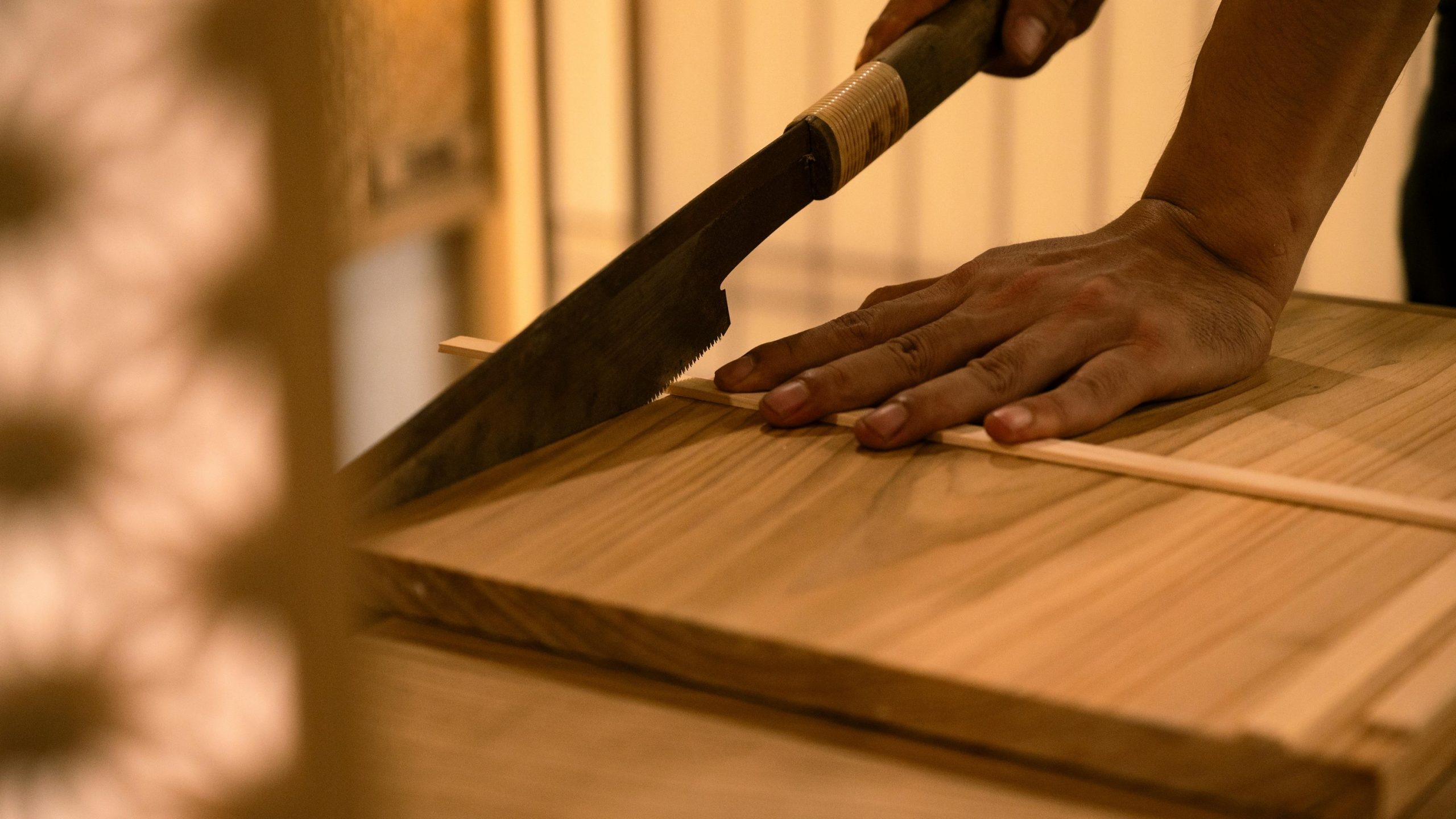
In a small workshop on a side street in Kyoto, a man sits at a low table making a single object. He has been making this object for forty years. The same family of things — wooden combs, ceramic bowls, lacquered bento boxes, knife blades — has occupied him since he was a teenage apprentice. He does not advertise. He does not have a website. He does not particularly want to expand. The shop is busy enough; the work is exacting enough; the day is full enough. When asked why he keeps making the same thing for decades, he sometimes shrugs and says it is not finished yet.
This is shokunin (職人), the Japanese word for “craftsman” — but with cultural weight that goes substantially beyond the literal translation. A shokunin is someone whose identity is bound to a specific craft, whose practice has aspects of moral and spiritual seriousness in addition to technical skill, and whose ambition is to refine the work itself rather than to expand a business or accumulate fame. The framing has been used to describe sushi chefs, wood-joinery specialists, knife-makers, calligraphers, carpenters, and many others.
This article traces what shokunin means as a working concept, the ethical and spiritual framing that distinguishes it from generic “craftsmanship,” the historical roots in Edo-period guild structure, and the contemporary tension between shokunin values and modern commercial scale.
Table of Contents
- What shokunin means
- More than craftsmanship
- The Edo context
- Shokunin and shokunin-kishitsu
- The Jiro effect
- Training and succession
- The modern pressures
- What the word protects
What shokunin means
The word shokunin (職人) decomposes into shoku (職, occupation or profession) and nin (人, person). The literal translation is “occupation-person” — someone whose identity is defined by their work. In ordinary Japanese usage, shokunin covers tradespeople and craftspeople of many kinds: carpenters, sushi chefs, plasterers, blacksmiths, weavers, potters, glass-blowers, and others working with materials and tools to produce specific physical results.
In dictionary terms, shokunin is roughly equivalent to “craftsman” or “artisan.” But the word carries cultural connotations in Japanese that the English equivalents do not fully reproduce. Calling someone a shokunin is, in many contexts, a serious compliment — it identifies them as someone who has reached a level of skill and dedication that distinguishes them from ordinary workers. It implies long apprenticeship, mastery of materials, and a particular kind of integrity in the work itself.
The word is also gender-neutral in modern usage, though the historical workforce of most Japanese crafts has been male. Female shokunin exist in significant numbers in textile arts, ceramics, calligraphy, and increasingly in fields like sushi preparation and knife-making, which had been traditionally male-dominated.
What is not implied by the word is fame, large-scale production, or business success. A shokunin may be quite poor. Their workshop may be small. They may produce only a few hundred objects in their entire career. The honour of the title comes from the quality and the dedication, not from the commercial result.
More than craftsmanship
The frequently cited phrase that distinguishes shokunin from generic craftsmanship comes from Tasio Odate, a Japanese-American woodworker, who wrote: “The Japanese word shokunin is defined by both Japanese and Japanese-English dictionaries as ‘craftsman’ or ‘artisan,’ but such a literal description does not fully express the deeper meaning. The Japanese apprentice is taught that shokunin means not only having technical skills, but also implies an attitude and social consciousness… The shokunin has a social obligation to work his/her best for the general welfare of the people. This obligation is both spiritual and material, in that no matter what it is, the shokunin‘s responsibility is to fulfil the requirement.”
This framing — that shokunin implies social and ethical obligation in addition to technical skill — is widely repeated in discussions of Japanese craft culture. Whether the framing is fully accurate as a description of how all craftspeople in Japan actually operate is debatable. Some practitioners would describe themselves more modestly. But the framing exists in the cultural vocabulary, and it shapes how the title is granted, used, and aspired to.
A central element of the framing is the obligation toward the work itself. A shokunin makes things that are useful, durable, and well-made because that is what the work demands, not because the customer is watching. The integrity is internal to the practice. Hidden joints in a wooden cabinet — invisible to anyone who is not the maker — are still meant to be cut precisely. A bowl thrown for a hundred-yen sale is still meant to be a good bowl. The discipline does not relax based on the audience.
This internal-standard orientation is part of why shokunin is sometimes connected to Zen-influenced understandings of work as practice. The work is its own discipline. Doing it carefully is a form of meditation. The skill that develops over decades is not just technical capability but a particular kind of attention that is difficult to describe in non-spiritual terms.
The Edo context
The cultural framing of shokunin as a distinct social category developed during the Edo period (1603–1868), when Japan operated under a four-class social structure: samurai, farmers, artisans (shokunin), and merchants. Shokunin in this period had a specific legal and social position — recognised as productive contributors to the economy, ranked above merchants but below farmers in the official hierarchy.
The Edo shokunin class was organised through guild structures (kabunakama) that regulated who could practise specific crafts, how apprenticeships ran, and what quality standards applied. These guilds had monopolistic control over their respective trades and could be quite restrictive. They also developed the master-apprentice system that became central to shokunin identity — a long, often unpaid or low-paid apprenticeship under a senior practitioner, focused on absorbing skills and ethical orientations rather than on credentials or formal certification.
The neighbourhood crafts of Edo (modern Tokyo), Kyoto, Osaka, and other cities included a remarkable range of specialisations: makers of specific types of swords, of specific kinds of pottery, of paper, of lacquerware, of bamboo objects, of textiles, of musical instruments, of foods, of tools. Each speciality had its own masters, its own techniques, its own quality standards. The cumulative effect was an artisan culture that was deep, varied, and integrated into urban life.
This Edo-period structure ended with the Meiji Restoration of 1868, which dismantled the official class system and opened many previously regulated crafts to broader participation. But the cultural framing of shokunin — the master-apprentice training, the lifelong dedication, the integrity of practice — survived the political change and persists today.
Shokunin and shokunin-kishitsu
A common Japanese phrase is shokunin-kishitsu (職人気質) — “shokunin spirit” or “shokunin temperament.” It refers to a particular character type associated with traditional craftspeople: stubborn, perfectionist, somewhat brusque in manner, more interested in the work than in social niceties, willing to refuse customers who do not appreciate what is being made, sometimes irascible.
The cultural archetype is real but often exaggerated. Many actual shokunin are pleasant, welcoming, and good at customer service. The grumpy-perfectionist stereotype is more visible in popular culture — manga, novels, films — than in everyday workshop interactions. But the stereotype carries a certain truth in that shokunin who are extremely focused on their craft sometimes do prioritise the work over the social demands of running a small business, which can produce a particular interpersonal style.
The phrase functions partly as praise and partly as caution. Calling someone a shokunin-kishitsu person can mean: they take their work very seriously, they have high standards, you should expect them to push back if you ask for something they do not want to do, and you should expect their work to be excellent precisely because they refuse to compromise. The character traits are admired even when they are inconvenient.
This cultural archetype helps explain how Japan has retained a substantial population of small-scale specialist craftspeople in an economy that otherwise rewards scale. The shokunin-kishitsu orientation toward depth over breadth, toward refining a single thing over launching new products, runs against modern business logic but produces results that some customers value enough to pay for. The economic model survives because the cultural respect for it has survived.
The Jiro effect
A significant moment in international awareness of shokunin culture was the 2011 documentary Jiro Dreams of Sushi, which followed the sushi chef Jiro Ono of Sukiyabashi Jiro in Tokyo. Jiro, then 85, had been making sushi for over 70 years. The documentary portrayed him as the model shokunin: relentlessly dedicated, narrowly focused on his craft, working past the age when most people retire, attending to small details that almost no customer would notice.
The film’s framing of Jiro as a shokunin exemplar was effective and influential. It introduced the word to many Western viewers and tied it specifically to Japanese sushi craftsmanship in ways that have shaped subsequent international perception. The phrase “shokunin spirit” began appearing in design discussions, business writing, and craft journalism in English-language contexts that had not previously used it.
The downside of the Jiro Dreams effect is that it tied shokunin somewhat narrowly to a particular elite, restaurant-based version of the concept. Shokunin in actual Japanese usage covers a much broader range — including modest neighbourhood plasterers and shoe repairers — and the elevated, almost monastic framing of Jiro can obscure the everyday sense in which many ordinary craftspeople think of themselves as shokunin. The word is more democratic in Japan than it has become in international usage.
A different but related international moment was the framing of kintsugi and shibori crafts as expressions of shokunin values. These framings are largely accurate but have sometimes been packaged in ways that emphasise marketing-friendly mysticism over the practical realities of craft work.
Training and succession
The training of a shokunin traditionally follows the master-apprentice (deshi-iri, minarai) model. A young person — historically a teenager — enters a master’s workshop and lives there for years, performing menial tasks, observing the master at work, and gradually being given more responsibility. Direct technical instruction is often minimal; the apprentice is expected to learn by watching, copying, and being corrected when they get something wrong.
This model has obvious inefficiencies. Apprentices may spend years on cleaning and minor tasks before they are allowed to attempt the actual craft. The lack of formal curriculum means progress varies. The reliance on direct observation requires the apprentice to be present in the master’s workshop daily. And the relationship is intense in ways that modern labour structures are not designed to accommodate — the apprentice may live with the master, may be expected to be available at all hours, and may have a personal relationship with the master that goes beyond an employment contract.
Despite these inefficiencies, the model is widely defended as the best way to transmit the deep knowledge that defines shokunin expertise. The argument is that the relevant knowledge is not codifiable in textbooks or videos — it lives in the master’s hands and eyes, and the only way to acquire it is to spend years in close proximity, absorbing it through observation and repeated practice.
The model is under pressure. Young people are less willing to enter long, low-paid apprenticeships when alternative careers are available. Modern labour law has constrained some of the more extreme aspects of traditional apprenticeships. Many specialised crafts face succession crises as masters age out and new apprentices fail to materialise. The result is that some traditional crafts are at risk of dying with their current generation of practitioners — a loss the Japanese government has begun to address through formal designation programs (Living National Treasures, Important Cultural Properties) that subsidise transmission.
The modern pressures
Contemporary shokunin face structural pressures that traditional ones did not. Mass production has eliminated much of the demand for hand-made versions of objects that machines can produce more cheaply. Imported alternatives — Chinese-made goods, factory-produced items — have pushed prices down for many craft categories. Younger consumers may not value hand-made objects highly enough to pay the premium that supports a shokunin income.
The internet has produced new opportunities and new pressures. Some shokunin have used online sales to reach international markets, finding customers who value their work enough to pay shipping costs from Japan. This has been a positive development for high-end specialists. But the same online environment has also made it easier for cheaper alternatives to compete with hand-made work, eroding the local markets that traditional craftspeople depended on.
Tourism has been a mixed factor. International tourists in Kyoto, for example, generate demand for high-quality craft objects as souvenirs. But tourist demand can also distort the market — pushing toward objects that look good in photos rather than objects that serve the long-term use cases that shokunin values traditionally emphasised. A workshop catering primarily to tourists may drift toward producing what photographs well rather than what works well.
The Japanese government has attempted to support traditional crafts through various subsidy and recognition programs. Designated craft products receive certification labels; particularly distinguished masters receive Living National Treasure designations with associated stipends; regional programs subsidise apprenticeship costs and workshop infrastructure. These supports have helped, though they have not reversed the underlying demographic and economic challenges.
What the word protects
What shokunin preserves, as a working concept in modern Japan, is a particular understanding that work can be its own end. Not all work, but specific kinds of work — work that involves materials, tools, and direct hand-skill — can be approached as a discipline whose value is not exhausted by the commercial output. The framing gives social respect to people whose lives are organised around this kind of work, and it provides a vocabulary for talking about the difference between making something quickly and making something well.
Whether this framing survives the next several decades depends on whether enough younger Japanese people choose to enter craft careers and whether enough customers continue to value hand-made over machine-made. The pressures are real. But the cultural attachment to the shokunin concept has proven remarkably durable across two centuries of social and economic change, and the word continues to function as a way of recognising and respecting practitioners whose work would otherwise pass invisibly.
A shokunin spends decades on a single craft because the work, taken seriously, is genuinely inexhaustible. The wood always responds slightly differently. The clay accepts different pressures. The blade requires a different angle. The accumulating attention produces a kind of expertise that cannot be acquired through reading or watching, only through years of doing. The Japanese cultural framing recognises this, names it, and gives it social weight. That naming is part of what has kept the practices alive.