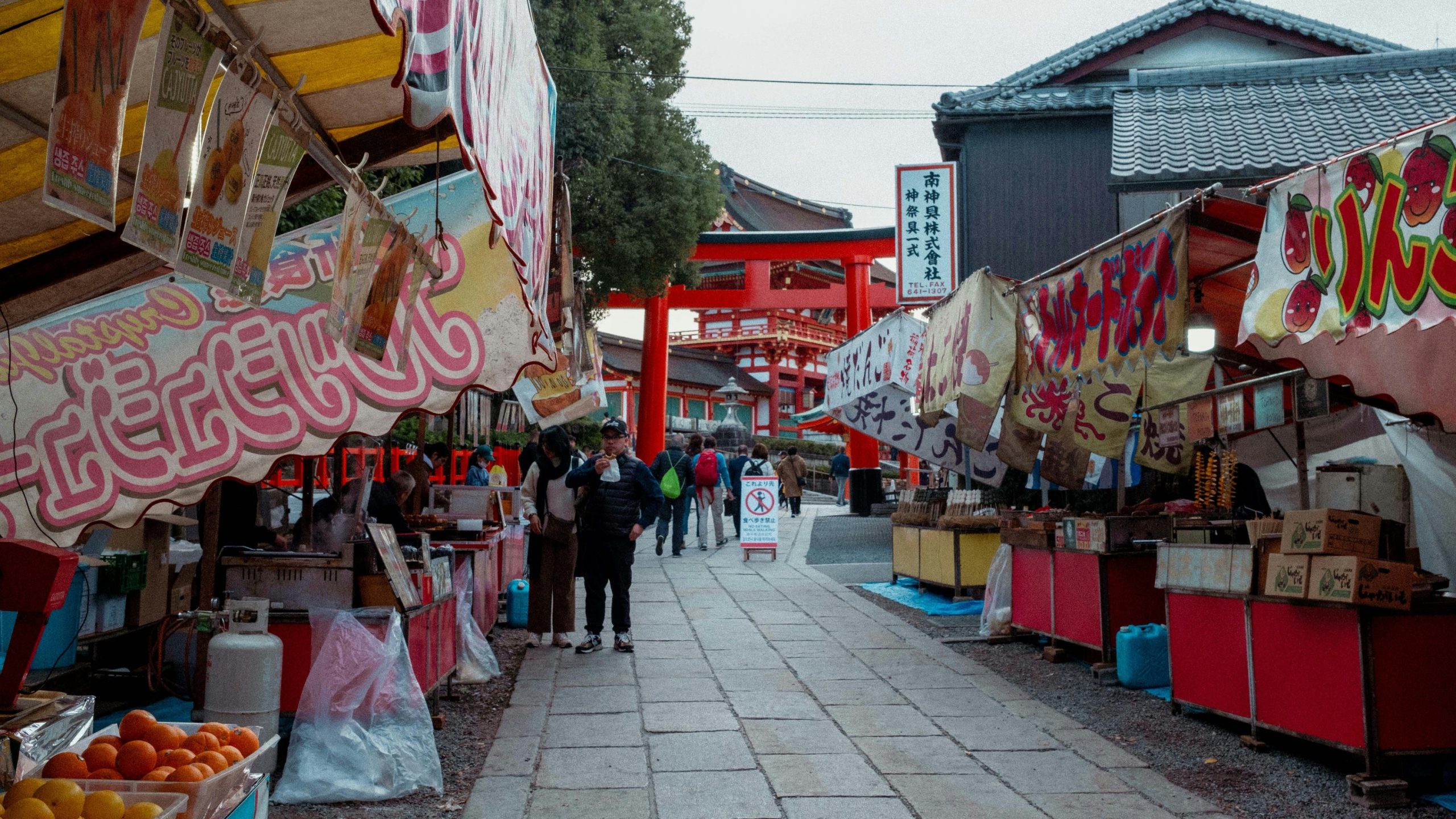
Lists of “Japanese culture facts” usually arrive as catalogs: bow when greeting someone, take your shoes off indoors, slurp your noodles, never tip. These are individually true, but presented as bullets they create a particular kind of false impression — that Japanese culture is a series of decorative quirks, learnable as a checklist before a vacation. The decoration is real but the operating logic underneath is what actually predicts how things go. Most foreign visitors who report being “confused by Japan” are not missing the bowing rules; they’re missing the implicit framework the bowing rules express.
This piece is a structured tour of that framework — the facts about Japanese culture that, if you understand them in the right order, make most of the other facts make sense. It is not a complete index. It is a path through the parts that explain the most when you assemble them. Each section links to a longer single-topic piece if you want to go deeper.
Table of Contents
- The operating mode: high context
- The social codes that follow from it
- The language of distance
- The aesthetics that keep recurring
- The year as scaffolding
- The everyday physical environment
- A small food map
- What’s been exported abroad
- A few things that aren’t true
- The principle underneath
The operating mode: high context
The single most useful frame for understanding Japanese social behavior is the distinction between high-context and low-context cultures, developed by anthropologist Edward Hall. In low-context cultures (much of the United States, Australia, the Netherlands), meaning is carried mostly in explicit verbal content. In high-context cultures (Japan, Korea, much of East Asia), meaning is carried significantly by setting, relationship, role, and shared implicit knowledge.
Concretely: when a Japanese coworker says “chotto muzukashii” (“a little difficult”) about your proposal, the explicit content is mild. The implicit content — depending on tone, posture, and context — may range from “let’s revise this” to “this is a firm no, please don’t push.” Listeners in a low-context culture who attend mainly to the explicit words frequently miss the actual message.
This is not a quirk; it’s the operating mode. Most other Japanese cultural patterns — the indirect language, the elaborate honorifics, the importance of sensing what’s not said — are downstream of high-context as a default. Once you internalize that the explicit words are doing only part of the work, much of the texture of Japanese interaction becomes legible.
The social codes that follow from it
Several specific social patterns are consequences of the high-context default:
Honne and tatemae — the distinction between one’s true feelings (honne, 本音) and the publicly expressed view (tatemae, 建前). Tatemae is not lying; it’s the socially appropriate version of one’s position, calibrated to the listener and the setting. Almost all professional and many social interactions operate primarily in tatemae mode. Reading the air (kuuki wo yomu) — the expected skill of inferring from context what the appropriate response is, without having to be told. People who fail to read the air get labeled KY (空気読めない, “can’t read the air”) — a real social penalty in Japanese workplaces and friend groups. Omotenashi — the Japanese style of hospitality, in which the host anticipates the guest’s needs before they’re articulated. This is the high-context principle applied to service: explicit requests should not be necessary, because the host has already noticed. Nemawashi — the practice of consensus-building through informal one-on-one conversations before a formal meeting. Decisions are not actually made in the meeting; they’re made in the corridors and over drinks beforehand, then ratified in the meeting.
If you’re in Japan socially or professionally, these four patterns explain a substantial fraction of what you’ll encounter.
The language of distance
Japanese encodes social distance into the grammar in ways that English does not.
Name suffixes (-san, -sama, -kun, -chan) are appended to names to mark the speaker’s relationship to the named person. Using the wrong suffix — first-naming someone you should call by their family name, or attaching -chan to a senior colleague — is a real social error. Keigo (敬語) is the broader system of Japanese polite speech, including respectful (sonkeigo), humble (kenjogo), and polite (teineigo) registers. Different verb forms, different vocabulary, different sentence endings — all calibrated by the speaker-listener relationship. Native speakers spend years developing fluency in keigo; non-native speakers usually use a simplified polite form (-masu / -desu) that is acceptable in most contexts. Pronouns are largely optional and frequently dropped. “I went” is just “went,” with the subject inferred from context. When pronouns appear, choosing between watashi, boku, ore, atashi (all “I”) signals gender, formality, age, and self-presentation — far more than the English “I” carries.
The aggregate effect is that Japanese sentences are constantly transmitting information about social relationships in addition to their explicit content. This is one reason translation between Japanese and English so often loses something — there’s no English-side slot for the relational metadata Japanese sentences carry.
The aesthetics that keep recurring
A small number of aesthetic concepts recur across Japanese art, design, food, and daily life. Recognizing them helps you read what you’re seeing:
Wabi-sabi — the appreciation of imperfection, weathering, and incompleteness. A tea bowl with an asymmetric glaze, a moss-covered stone, an unrepaired crack are all wabi-sabi. Mono no aware — the gentle sadness of impermanence, the heightened beauty of things about to end. Cherry blossoms are the standard example. The mood is not “carpe diem” but something more attentive and more melancholy. Yugen — the suggestion of depth or mystery, the implied vastness behind what is actually shown. Often invoked for theatre, garden design, and certain styles of poetry. Shibui — restrained, understated refinement. The opposite of garish. A dark wooden tea-house and a simple navy kimono can both be shibui. Ma (間) — the active use of negative space and silence as compositional elements. Visible in architecture, in music’s pauses, in the spacing of objects in a room.
These aren’t decorative labels — they’re load-bearing concepts that working artisans, designers, and cultural commentators actually use to evaluate work.
The year as scaffolding
Japanese cultural life is heavily organized around a seasonal calendar. Many holidays, foods, and aesthetic experiences are explicitly tied to specific weeks or months.
Spring — hanami (cherry blossom viewing) in late March / early April, the Shinto festival season picking up, the new fiscal year beginning April 1. Summer — local matsuri (festivals) across the country, tanabata on July 7, the obon ancestor-honoring period in mid-August. Autumn — momiji-gari (autumn-leaf viewing), the sweet potato and chestnut season, shichi-go-san for children of ages 3, 5, and 7. Winter — year-end bonenkai drinking parties, New Year (hatsumode, otoshidama, fukubukuro lucky bags), winter kotatsu heated tables.
The calendar is denser and more observed than in many Western countries — most Japanese adults can tell you what’s seasonal at any given moment, what foods belong to it, what holidays are upcoming.
The everyday physical environment
A few physical-environment facts are worth knowing because they shape daily life:
Genkan — the entryway in homes, schools, and many traditional spaces, where outdoor shoes are removed before stepping up to the indoor floor level. This is universal in Japanese homes and non-negotiable. Tatami — the woven straw flooring used in traditional rooms. Room sizes are measured in tatami mats. Walking on tatami in shoes is a serious error. Ofuro and onsen — Japanese bathing involves washing thoroughly before entering the soaking tub. The tub is for relaxation, not cleaning. Onsen (hot springs) follow the same logic. Konbini — convenience stores function as basic urban infrastructure: bills can be paid, packages received, hot meals bought 24 hours a day. Quality is dramatically higher than in most other countries’ equivalents. Vending machines — over four million across the country, selling drinks, hot and cold; some sell food, hot meals, even umbrellas. They reflect a culture that has prioritized convenience and trust in public spaces.
A small food map
Japanese food is more regionalized than the international image of “sushi and ramen” suggests:
Staples — rice, miso soup, pickles (tsukemono), grilled fish form the everyday backbone. Washoku (traditional Japanese cooking) emphasizes seasonality and presentation. Festival and celebration foods — mochi at New Year, wagashi confections with tea, kaiseki multi-course meals at high-end occasions. Workday convenience — ekiben train-station bento boxes, kyaraben character bento for children, the omnipresent konbini onigiri rice ball. Drinking culture — sake, beer, shochu, highballs (whisky-soda), with the izakaya (居酒屋) pub as the standard social setting after work.
What’s been exported abroad
A subset of Japanese culture has become globally visible:
Pop culture — anime, manga, J-pop, vtuber streamers, tsundere and yandere character archetypes. Aesthetics — kintsugi (gold-mended pottery), shinrin-yoku (forest bathing), the Marie Kondo tidying method, the karesansui (Zen rock garden) reimagined as desk-set kits. Food abroad — sushi, ramen, matcha, yuzu — generally adapted significantly from their domestic versions. Concepts — ikigai, kaizen, omotenashi — sometimes simplified into self-help or business-book frameworks that don’t exactly match the domestic usage.
A useful working assumption: if you’ve seen a Japanese cultural concept on a wellness Instagram or in a TED talk, the version that traveled is at least somewhat compressed compared to what the same concept means inside Japan.
A few things that aren’t true
Some widely repeated “facts” about Japan are wrong, oversimplified, or out of date:
“Japan is a homogeneous society.” Contains a kernel of truth but flattens significant regional, ethnic, and class diversity. Okinawan, Ainu, Korean-Japanese, Brazilian-Japanese, and other distinct groups exist within the country. “Japanese people don’t show emotion.” They show emotion frequently — just calibrated to setting. The same people who are reserved in a meeting may be openly expressive at a karaoke bar. “Tipping is offensive.” Tipping is genuinely not customary, and trying to tip a waiter or taxi driver will produce mild confusion. “Offensive” is overstated. “Everything in Japan is high-tech.” Some sectors (consumer electronics, transit, vending machines) are highly developed; others (small-business accounting, government paperwork, fax machines) are conspicuously behind. The country is unevenly modernized.
If a generalization about Japan sounds clean and dramatic, it’s usually been simplified.
The principle underneath
What “Japanese culture facts” really demonstrates, taken together, is that no cultural facts make sense as bullet points removed from the framework that produced them. The bowing rule isn’t a rule about head angles; it’s an expression of a high-context, status-attentive social mode. The cherry blossom viewing isn’t about flowers; it’s about a country that has chosen to synchronize itself around a brief seasonal event. The honorifics aren’t grammatical pedantry; they’re how the language carries the relational information that English handles with body language, tone, and cumulative context.
The most useful thing a non-Japanese reader can do, before memorizing facts, is internalize that the facts are downstream of one or two large structural choices: high-context communication, attention to social distance, aesthetic investment in transience and restraint. With those three frames in place, most specific facts arrive already pre-explained — and the few that don’t fit get noticed as actually surprising rather than confidently misunderstood.